
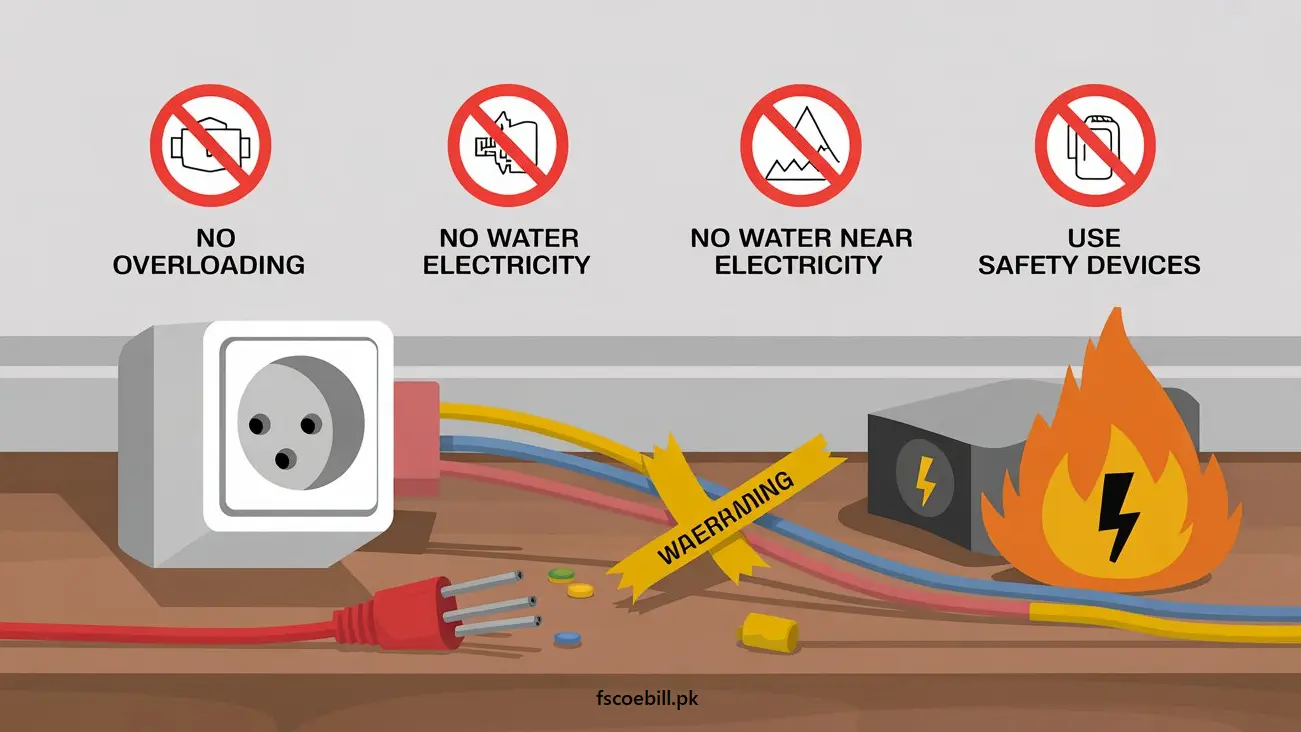
FESCO Electricity Safety Measures
The wrong use of electricity can cause circuit damage. Our daily lives are impacted by electricity. You may want to learn about safety measures for electricity that will increase your home’s safety. Short circuits, damaged wires and other potential hazards can be caused by electricity.
After extensive research, I have come up with a few safety measures to increase the safety of your electricity at home. These safety measures can be easily implemented and are simple to implement. The safety measures below can be followed.
Check your FESCO Duplicate bill Click here.
Safety Measures include
1. Keep Flammable Items Away
Avoid putting petrol, gas or fuel near short circuits, broken wires, or other materials that can easily catch fire.
2. Do Not Overload Sockets
Avoid overloading sockets. The socket will become hot if you overload it. This can lead to fire or burns.
3. Don’t use wires that are damaged or broken
Damaged wires may spark, cause a shock or even start a fire. Use only wires in good condition and that are safe.
4. Teach your family about safety
Tell your family to avoid touching damaged or wet wires, appliances that are stuffed with water, and plugged sockets.
5. Install Fuses to Protect
When the voltage is too high, the fuses will stop the electricity. Protect your home against electrical damage.
6. Use Circuit Breakers
Circuit breakers automatically shut down power when voltage becomes unsafe. This prevents serious accidents.
7. Keep electricity and water separate
Water can produce a powerful electric shock. Keep cords, switches and appliances away from water. Also, keep your hands drier.
8. Unplug Cords and Unplug Correctly
Unplug your device by grabbing the plug and not the wire. Keep cords out of reach of children, neatly arranged, and away from heat.
9. Take care and use warning signs near power lines
Keep an eye out for power lines and ladders when climbing or using ladders.
10. Do not try to fix electrical issues yourself
It is dangerous to repair electrical problems without proper training. In an emergency, call a qualified electrical contractor.

